

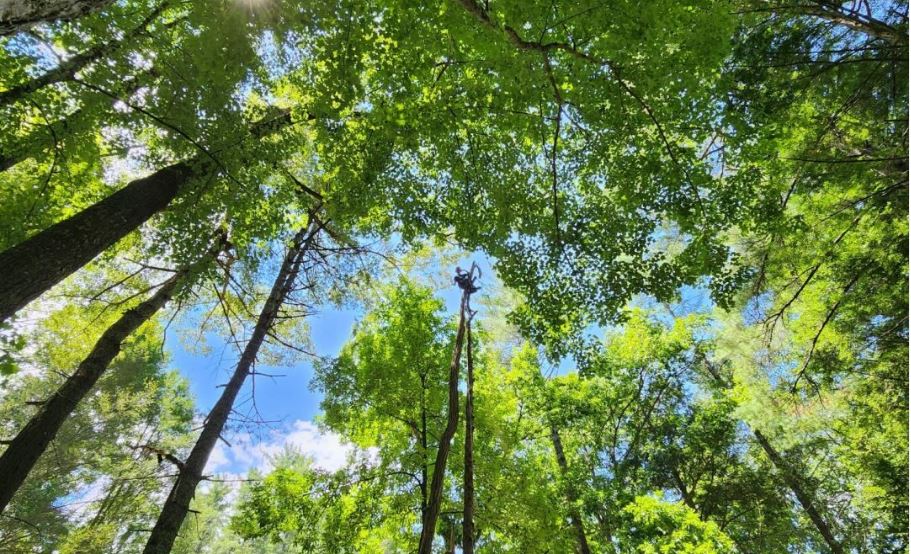
Professional Tree Pruning in Blue Ridge, GA
Healthy trees are an important part of what makes a property beautiful, functional, and connected to the natural landscape. But even mature, established trees benefit from thoughtful maintenance. Professional tree pruning helps maintain healthy growth, improve structural integrity, remove hazardous limbs, and preserve the natural form of your trees.
At Best Earth Solutions, we provide professional tree pruning in Blue Ridge, GA, and throughout the surrounding Tri-State area. Led by Ian Best, an ISA Certified Arborist, our approach combines technical arboricultural knowledge with an understanding of the natural systems that support healthy trees.
Whether your trees need routine maintenance, selective limb removal, or attention to damaged and overgrown branches, we can help determine the right approach for your property.
Why Is Professional Tree Pruning Important?
Tree pruning is the selective removal of branches to improve a tree’s health, structure, safety, or appearance. When performed correctly, pruning can help trees develop stronger structures and better withstand environmental stresses. However, improper pruning can cause unnecessary damage, create entry points for decay, and compromise a tree’s long-term health. Understanding where, when, and how to make pruning cuts is essential.
Professional tree pruning can help address several common concerns:
Improve Tree Health
Removing dead, damaged, diseased, or compromised branches can reduce potential sources of decay and improve the overall condition of a tree. Selective pruning can also help maintain a healthier branch structure while preserving the tree’s natural growth.
Reduce Potential Hazards
Dead limbs, broken branches, and structurally compromised growth can pose risks to people, buildings, vehicles, and other areas of a property. Pruning can remove certain hazards before they become more serious problems.
Improve Structure and Stability
Some trees develop competing leaders, crossing branches, weak branch unions, or uneven growth. Structural pruning can help guide development, particularly in younger trees, and address certain structural concerns in established trees.
Maintain Clearance Around Buildings and Property
Branches growing too close to roofs, structures, driveways, walkways, and other areas may need selective pruning. Proper clearance can help reduce interference and protect both trees and property.
Preserve Natural Appearance
Good pruning works with a tree’s natural growth habits rather than simply cutting it back. Selective branch removal can improve appearance while maintaining the tree’s natural form and canopy.
Our Approach to Tree Pruning
Every tree and property is different. The right pruning strategy depends on the species, age, health, growing conditions, structural characteristics, and surrounding environment. At Best Earth Solutions, we evaluate the individual tree and its surroundings before recommending work. Our goal is to make thoughtful, purposeful cuts that address the property’s needs without removing more growth than necessary. Our tree pruning process typically includes:
1. Tree Assessment
We begin by evaluating the tree’s overall condition, including its structure, canopy, visible signs of damage or disease, and surrounding environment. We also consider the property’s goals and any concerns about nearby structures or potential hazards.
2. Pruning Recommendations
Based on the assessment, we determine which branches may benefit from removal and what type of pruning is appropriate. We consider the tree’s natural form, long-term health, and the objectives of the property owner.
3. Professional Pruning
Pruning is performed using appropriate techniques and equipment for the tree and site conditions. We focus on selective branch removal and proper cutting practices rather than unnecessary canopy reduction.
4. Cleanup and Property Care
After the work is complete, we address the resulting branches and debris according to the agreed-upon scope of work, leaving the area in a clean and orderly condition.

Types of Tree Pruning Services
Different trees require different pruning approaches. Depending on the condition of the tree and your property’s needs, professional pruning may include several types of work.
- Crown Cleaning: Crown cleaning involves removing dead, dying, diseased, broken, or otherwise compromised branches from within the canopy. This helps address potential hazards and maintain the tree’s overall condition.
- Structural Pruning: Structural pruning focuses on improving branch arrangement and developing a stronger framework. It is particularly valuable for young and developing trees, although certain structural concerns can also be addressed in mature trees.
- Structural pruning focuses on improving branch arrangement and developing a stronger framework. It is particularly valuable for young and developing trees, although certain structural concerns can also be addressed in mature trees.
- Selective Crown Reduction: Crown reduction selectively reduces the size or spread of a canopy while maintaining the tree’s natural form and structural integrity. This may be appropriate when a tree has outgrown its available space or needs targeted clearance.
- Clearance Pruning: Clearance pruning removes or shortens selected branches that interfere with buildings, roofs, driveways, walkways, or other areas. The objective is to create appropriate clearance while preserving as much healthy growth as practical.
- Deadwood Removal: Deadwood removal targets dead branches that may eventually fall, particularly when they extend over frequently used areas or structures. The amount and location of deadwood help determine the appropriate pruning strategy.
Tree Pruning in the North Georgia Mountains
Trees in the Blue Ridge area grow in a landscape shaped by changing elevations, varied terrain, seasonal weather, and diverse forest communities. From wooded residential properties to mountain homes and larger rural parcels, local trees face a range of growing conditions. Steep slopes, dense canopies, storm exposure, and proximity to homes and other structures can all influence how tree maintenance should be approached.
Best Earth Solutions serves property owners throughout Blue Ridge, Ellijay, Blairsville, Murphy, and surrounding communities in North Georgia and Western North Carolina. We understand that trees are part of a much larger landscape. Our approach considers not only the individual tree but also its relationship to surrounding vegetation, soil, terrain, and the people who use the property.
Why Choose Best Earth Solutions for Tree Pruning?
Tree pruning requires more than a chainsaw and an understanding of how to remove branches. It takes knowledge of tree biology, structural development, proper pruning techniques, and the potential consequences of unnecessary cutting. When you work with Best Earth Solutions, you benefit from:
- ISA Certified Arborist leadership: Your tree care recommendations are guided by Ian Best’s professional arboriculture knowledge and experience.
- Thoughtful pruning practices: We focus on the needs of each individual tree rather than applying a one-size-fits-all approach.
- Technical experience: Our background includes residential and urban tree care, climbing, aerial lift equipment, and complex tree work.
- Respect for the landscape: We consider the surrounding environment and the long-term health of your property’s trees.
- Local service: We work with property owners throughout the Blue Ridge region and the surrounding Tri-State area.
Our philosophy is simple: good tree care should protect the value of your property while respecting the natural systems that make the landscape what it is.
Schedule Professional Tree Pruning in Blue Ridge, GA
Healthy trees deserve thoughtful care. Whether you have concerns about dead branches, overgrown limbs, structural development, or general tree maintenance, Best Earth Solutions can help you determine the right approach.
Contact Best Earth Solutions to discuss your property and schedule a tree pruning assessment. We provide professional tree care rooted in technical expertise, ecological understanding, and respect for the land.
Frequently Asked Questions about Tree Pruning
What is the difference between tree pruning and tree trimming?
Tree trimming is sometimes used more broadly to describe cutting back vegetation for appearance or clearance. Professional pruning considers the tree’s biology and long-term condition.
When is the best time of year to prune trees in Georgia?
The best time depends on the species and the reason for pruning. Many trees can be pruned during dormancy, while dead, damaged, or hazardous branches may need attention regardless of the season. Certain flowering trees and species have specific timing considerations.
Can you prune a tree without changing its natural shape?
Yes. Selective pruning can remove specific branches while preserving much of the tree’s natural form. The goal is to make appropriate cuts without unnecessarily reducing the canopy or altering the tree’s overall structure.
How often should trees be pruned?
The appropriate frequency depends on the tree species, age, health, location, and maintenance goals. Some trees may benefit from periodic structural pruning, while others may only need occasional attention to remove dead or damaged branches.
Can pruning help prevent branches from falling during storms?
Pruning can help address certain hazards by removing dead, damaged, or structurally compromised branches. However, it cannot eliminate the risk of storm damage. Wind, saturated soil, disease, decay, and other factors can still contribute to tree or branch failure.
Should dead branches always be removed?
Dead branches may present a safety concern, particularly when they extend over homes, driveways, walkways, or other frequently used areas. The urgency and extent of removal depend on their size, location, and likelihood of falling.